
Vinted has become one of the most popular platforms in the UK for buying and selling second-hand clothing and accessories. But with its rapid growth, it has also attracted scammers—particularly targeting new users who are less familiar with how the platform works.
In this article, we break down the most common scams on Vinted, how they affect both buyers and sellers, and what you can do to protect yourself.
Buyer Scams: How They Target Sellers
Fake Item Claims
Some buyers falsely claim that an item is counterfeit, even if it’s authentic. They request a refund while keeping the item, exploiting Vinted’s buyer protection policy.
Bogus Complaints
A buyer may claim the item is damaged, stained, or incorrect, even when it arrives as described. This can result in the seller being forced to refund, especially if there’s limited evidence to support their side.
High-Value Theft (“Item Never Arrived”)
A buyer may purchase an expensive item, such as designer clothing or tech products—and then claim it never arrived. This scam is common with Apple products, trainers, and handbags. If you are selling high value items, it is important to document / film postage and packaging of these items.
Seller Scams: How They Target Buyers
Sending the Wrong Item
Some dishonest sellers post real photos of desirable products but ship something entirely different. This is done to make the transaction seem legitimate before the buyer realises they’ve been scammed.
Fake Returns
When buyers return an item, some sellers claim they received a different item or nothing at all. Without video or photo evidence of the return, this can lead to the buyer losing both the item and the refund.
Suspicious Royal Mail Usage
Scam sellers often use only Royal Mail and may upload tracking numbers just minutes after the sale. In many cases, these are recycled or fake tracking numbers. Avoid sellers who don’t offer tracked in-app shipping.
Mislabelled Fast Fashion
Sellers sometimes relist cheap clothing from SheIn, Aliexpress, or Temu and market them as Y2K, Alternative, or Vintage to mislead buyers into paying more than the item is worth.
General Scams: Red Flags for Any Vinted User
Phishing Emails to Collect Payment Info
Scammers sometimes send emails outside of the app asking you to register your payment or banking information. This is never legitimate. Vinted will never contact you via email to collect personal or payment information. All transactions and payment setup must be done securely through the Vinted app.
Post-Sale Requests for Personal Information
After a sale, a scam seller may message you asking for your name, address, or phone number claiming they need it for shipping. This is a red flag. All shipping details are automatically added to the postage label through Vinted. Once they get your info, they may cancel the sale and keep your personal data, which can be used for phishing or identity fraud.
Payment Outside the Platform
Scammers often ask buyers to move the sale off Vinted to WhatsApp, PayPal, or bank transfer. Once the transaction is done outside of Vinted’s system, there’s no protection or recourse if something goes wrong.
Malicious Links
Some scammers send malicious links via direct messages that redirect you to fake websites designed to steal your login credentials, download harmful software, or mimic the Vinted login page. These links often look convincing but are not affiliated with Vinted in any way.
QR codes are also increasingly being used in scams—you may receive an image or message asking you to scan a code for tracking, payment, or to “verify your account.” Never scan QR codes sent by strangers on Vinted. If a seller or buyer requests this, it’s almost certainly a scam. Below is an example of what these QR code messages may look like.
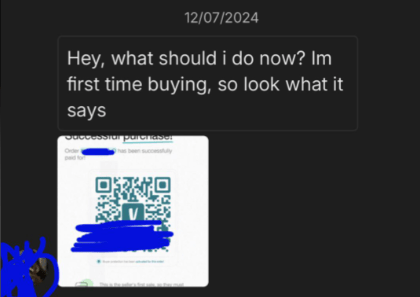
Always use Vinted’s official app or website for all tracking, messages, and payment setup.
How to Protect Yourself on Vinted
- Always Use Vinted’s In-App Systems
Stick to Vinted’s built-in messaging, shipping, and payment options. This is the only way to ensure buyer/seller protection. - Avoid Sellers with No Reviews Selling Expensive Items
Be wary of brand-new accounts offering high-ticket products without verified shipping methods. - Never Share Personal Information
You don’t need to give your address, email, or phone number manually. Vinted automatically provides this on the label. - Be Cautious of Fast Fashion Misrepresentation
If the item is labelled “vintage” but shows signs of being modern fast fashion, ask for photos of labels or tags. - Record Your Transactions
As a seller, take photos or videos of your packing process. As a buyer, film unboxing to prove what you received. - Report Suspicious Activity
Use Vinted’s built-in reporting tool to report users who request off-platform payments or behave suspiciously. - Don’t Fall for Too-Good-To-Be-True Deals
Extremely low prices on designer items or electronics are often a sign of a scam.



 Closet Cashflow
Leave a comment